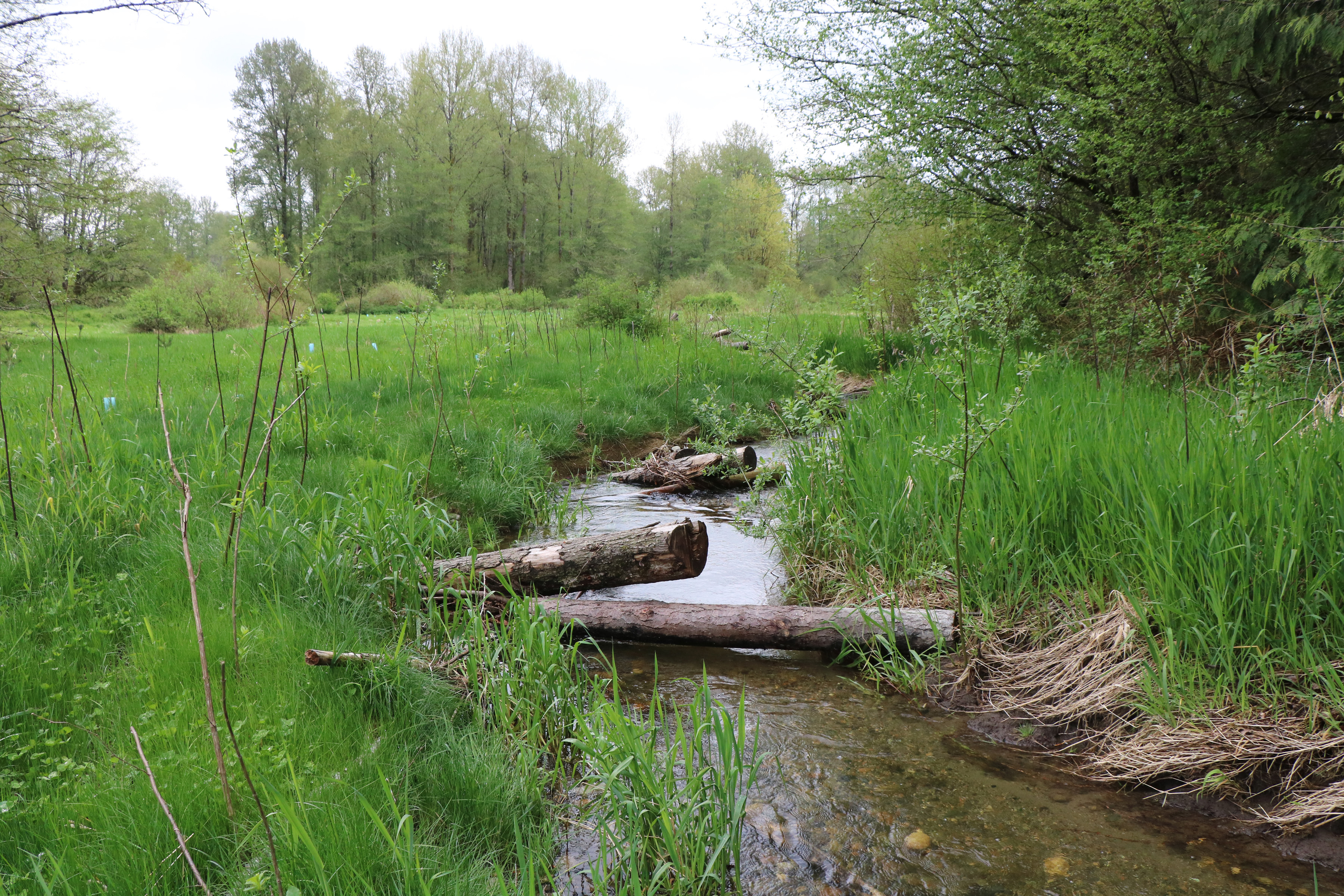
In the Snohomish and Stillaguamish River basins, Snohomish Conservation District is improving water quality, enhancing habitat, and supporting salmon recovery through riparian restoration and stewardship efforts in both rural and urban landscapes. Through the Riparian Grant Program, the district planted 12.78 acres of new riparian forest buffer and maintained 32 acres of established streamside habitat, helping ensure these critical corridors continue to provide ecological benefits over time.
These efforts contribute to healthier watersheds by protecting streambanks, improving habitat conditions, and supporting regional recovery goals for salmon and other native species. The work also complements broader riparian restoration initiatives led by the Tulalip Tribes and the Stillaguamish Tribe, demonstrating the value of coordinated conservation efforts across the region. Through sustained investment in riparian habitat, Snohomish Conservation District is helping build healthier, more resilient watersheds for future generations.
Whatcom Conservation District is improving water quality, stream health, and salmon habitat in the Nooksack River watershed through large-scale riparian restoration, native plantings, and long-term habitat stewardship, demonstrating how local conservation efforts can create lasting benefits for both communities and natural resources.
Wildfire resilience work on Jackson Ranch near Nespelem, Washington was put to the test when the July 2026 Kaiser Canyon Fire swept through.
With support from the Riparian Plant Propagation Program, large-scale native plant production is underway through a partnership with Puget Sound Plants, enabling the cultivation and statewide distribution of more than 30,000 riparian plants. This high-volume nursery system strengthens Washington’s restoration supply chain and ensures consistent access to locally grown native material.


