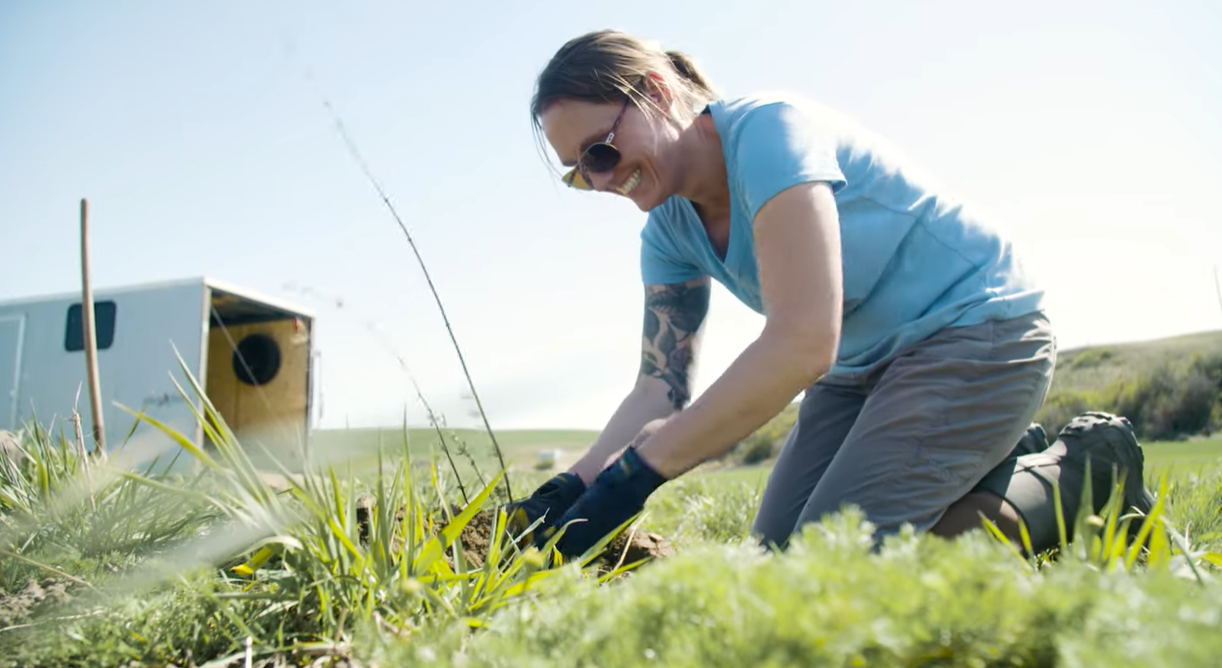
For years, erosion and runoff along Hangman Creek and Little Hangman Creek have damaged farmland and degraded habitat. Now, farmers are partnering with the Spokane Conservation District (SCD), Pine Creek Conservation District (PCCD), and the Washington State Department of Ecology through the Hangman Creek Riparian Restoration and Conservation Program to change that story. The program provides technical assistance and financial incentives to help landowners voluntarily restore creeks, reduce erosion, and improve water quality.
Generational grower John Heaton worked with SCD and partners to reshape a straightened stretch of Little Hangman Creek into natural bends and plant hundreds of trees along the banks. When spring floods came, the restored channel held firm, protecting fields while improving habitat for fish and wildlife.
With projects like this, farmers and their conservation district partners are showing that collaboration works. Through voluntary conservation, they’re building a more resilient future for the Hangman Creek watershed, one where healthy water and productive farmland flow together.
Wildfire resilience work on Jackson Ranch near Nespelem, Washington was put to the test when the July 2026 Kaiser Canyon Fire swept through.
With support from the Riparian Plant Propagation Program, large-scale native plant production is underway through a partnership with Puget Sound Plants, enabling the cultivation and statewide distribution of more than 30,000 riparian plants. This high-volume nursery system strengthens Washington’s restoration supply chain and ensures consistent access to locally grown native material.
Grays Harbor Conservation District maintains tens of thousands of native plants annually at a partner-operated holding site, using gravel beds and nursery infrastructure to support healthy plant growth and regional riparian restoration. Through project support and community distribution, the district helps meet evolving restoration needs across the region.


