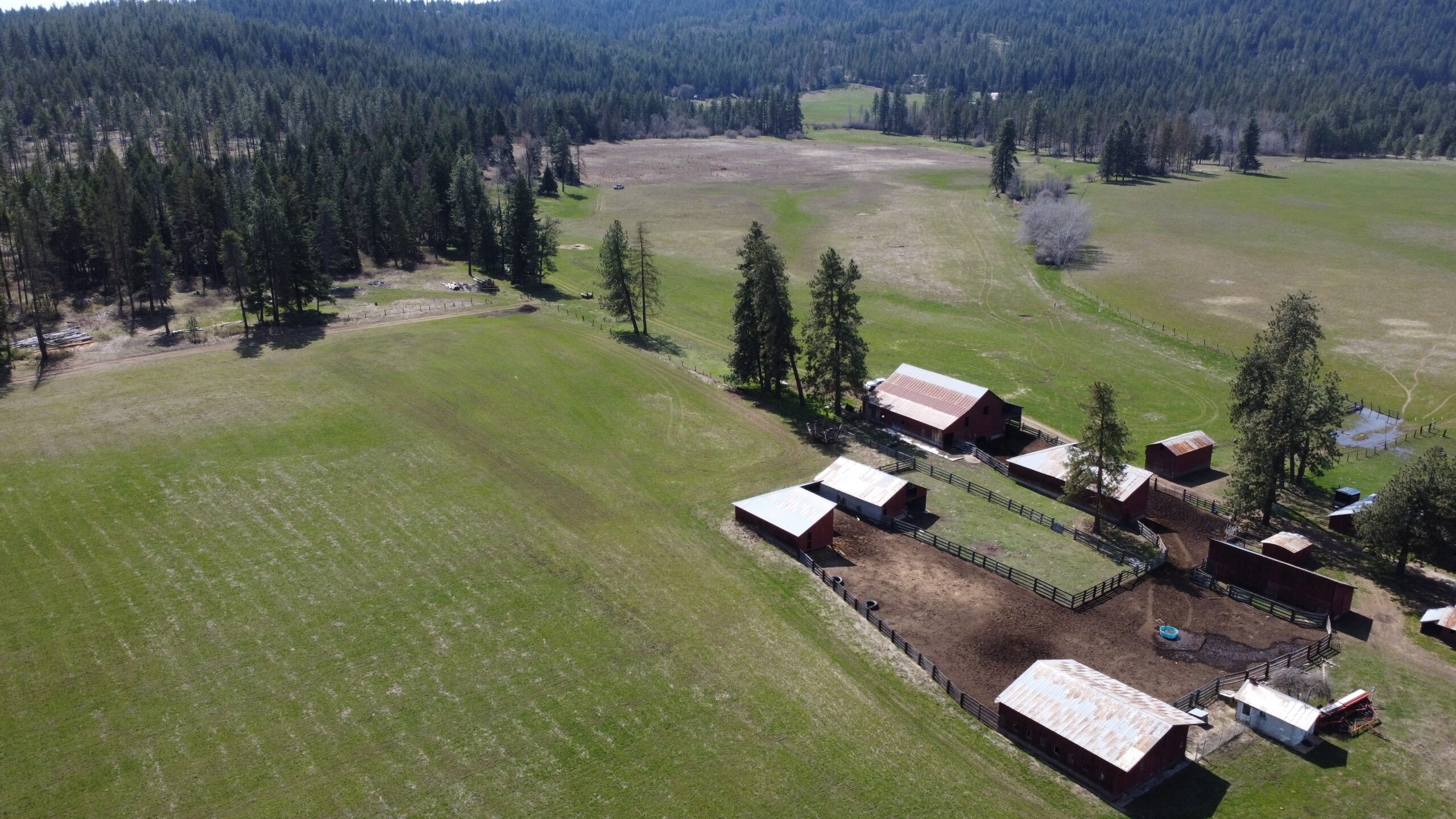
The Vetter Farm has been part of the local agricultural landscape since the 1890s. Once a family homestead, the property was generously donated to Washington State University (WSU) in 2020 and is now jointly managed by the Stevens County Conservation District (SCCD) and WSU Extension.
Together, SCCD and WSU have revitalized the 158-acre property into a working demonstration site that mirrors a typical Stevens County farm while also serving as a hub for research, education, and innovation. About 120 acres are managed in partnership to support soil health trials, agroforestry demonstrations, and a reservoir for livestock, all designed to promote resilience amid shifting precipitation patterns.
The mission of Vetter Farm is simple yet powerful: to provide the local agricultural community with a space for networking, sharing ideas, and testing new approaches that strengthen the region’s working lands. Through partnerships with NRCS, Washington Department of Fish and Wildlife, and local producers, the farm hosts hands-on field days and collaborative learning events that bring science and practice together.
The Vetter Farm stands as a testament to the value of partnership, where local knowledge, research, and conservation align to ensure Stevens County agriculture continues to thrive for generations to come.
Generations of farming along Hangman Creek have faced erosion and water quality challenges. Through a partnership between the Spokane and Pine Creek Conservation Districts and the Washington State Department of Ecology, local landowners are restoring natural stream channels, planting native vegetation, and stabilizing creek banks, all while keeping working lands productive. Together, they’re proving that voluntary conservation benefits both farms and fish.
Generations of farming along Hangman Creek have faced erosion and water quality challenges. Through a partnership between the Spokane and Pine Creek Conservation Districts and the Washington State Department of Ecology, local landowners are restoring natural stream channels, planting native vegetation, and stabilizing creek banks, all while keeping working lands productive. Together, they’re proving that voluntary conservation benefits both farms and fish.
In the glacial valleys of Stevens County, the Hagen family partners with the Stevens County Conservation District to advance voluntary conservation on their registered Black Angus and Hereford operation. Through programs like VSP and Floodplains by Design, they’re improving soil health, managing manure responsibly, and maintaining productive irrigated pastures.


